Intermediate Apprenticeship (Level 2) General Farm Worker
Role overview
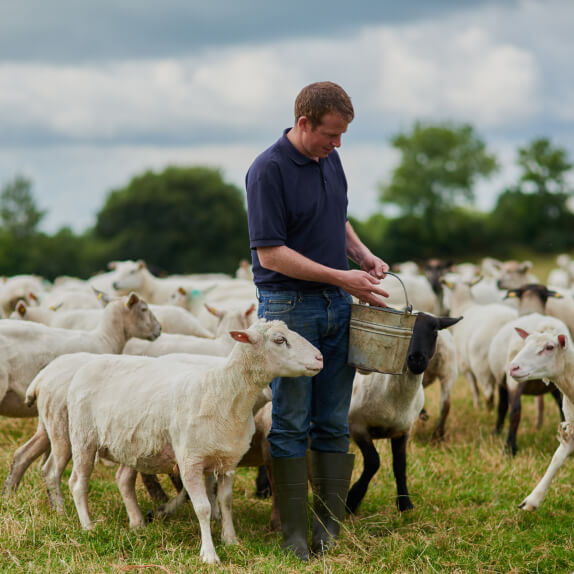
The general farm worker will support the operation of farm enterprises through maintaining a culture of health and safety, biosecurity, engaging with third parties, maintaining crop, animal handling and health, maintenance and cleanliness of machinery. The General Farm Worker will typically be required to drive farm vehicles and must hold the appropriate license. The individual will work alongside the supervisor, supporting daily operations for the farm enterprises including identifying and maintaining animal or plant health performance, conducting routine tasks and assisting with general record keeping practices. The individual will manage the storage of forage and crop, minimising waste and disposing of necessary waste appropriately. Animal welfare and risk awareness and prevention are integral to this occupation.
A General Farm Worker is likely to specialise in Livestock or Crop. This Apprenticeship Standard takes a core and options approach. All apprentices will complete the core and must select the one most appropriate option to their role: Livestock Worker or Crop Worker.
Entry requirements
Apprentices aged 16 to 18 at the start of their training are required to achieve English and maths qualifications to complete their apprenticeship, if they do not already hold suitable equivalent qualifications. Apprentices who do not already hold a suitable equivalent qualification in either English or maths or both subjects are funded to achieve up to an approved level 2 qualification in these subjects.
Apprentices aged 19+ at the start of their training can also be funded to study up to an approved level 2 qualification in English or maths or both, if they do not already hold suitable equivalent qualifications and their employer agrees that this should be part of their training plan.
Qualifications obtained
L2 Apprenticeship in General farm worker
Programme includes
On completion of this apprenticeship, apprentices will have developed the knowledge, skills, and behaviours required to work confidently and safely within the agricultural sector.
They will be able to:
- Maintain animal and crop health to industry standards
- Contribute effectively to a range of day-to-day farm operations
- Apply and uphold health & safety practices, including biosecurity measures
- Administer Emergency First Aid in the Workplace (Level 3)
- Handle pesticides safely, completing the PA1 qualification (with the potential to progress to PA2 or PA6 spraying courses)
Apprentices will also:
- Build a portfolio of evidence demonstrating competence and achievement
- Work towards achieving English and Maths at Level 2, if not already achieved.
Optional Pathways (role-dependent):
- Livestock Worker – supporting the care, welfare, and production of farm animals
- Crop Worker – supporting the cultivation, maintenance, and harvesting of crops
Optional Additional Courses (available at additional cost):
- PA2 / PA6 – Safe use of pesticides with boom sprayers and knapsack sprayers
- Forklift operation – Safe and effective use in farm environments
- Chainsaw (CS30) – Maintenance and safe use of chainsaws
Where can you work?
- General Farm Operative / General Farm Worker
- Assistant Herdsperson
- Stockperson
- Shepherd (on sheep farms)
- Tractor Driver (or operator of other farm vehicles)
Key information
Starts
- The apprenticeship programmetypically starts in November
Enrolment
- The enrolment process will be completed prior to the start date of the apprenticeship
Delivery
- The apprenticeship will delivered at Brooksby College for one day per week (Term time only)
Awarding organisation
Lantra
Progression opportunities
- Level 3 roles, e.g. Livestock Technician or Crop Technician apprenticeships
- Farm supervisor / senior operative roles
- Farm Manager / Assistant Manager (with more experience, responsibility)
- Contractor roles, machinery operation & services for multiple farms
Additional information
Mandatory qualifications to enter gateway
- Level 3 award or training and assessment in emergency first aid at work minimum 1 day course (face-to-face), carried out by either an awarding organisation, a UKAS accredited trade body or voluntary aid society recognised by government as
specified in HSE document GEIS 3
- City & Guilds Principles of Safe Handling and Application of Pesticides Guidance or Lantra Safe use of Pesticides